
On this page:
Cycling in Canberra
Canberra has a network of shared paths, on-road bike lanes and neighbourhood streets for safe and accessible cycling. Check the walking and cycling maps to plan your trip, including downloadable cycling maps for each region.
Whether you’re riding a bicycle or an e-bike, it’s important to understand the rules that apply in the ACT and how to ride safely around other road and path users.
The ACT Road Rules apply differently to different kinds of vehicles and devices. Knowing how your device is categorised under the Road Rules will help you to follow the correct rules for the mode of transport you are using.
Information on this page applies to bikes and e-bikes. Different rules apply to scooters, e-scooters and other wheeled electronic devices. See the e-scooters and personal mobility devices page for more information.
Bikes on public transport
You can take your bike on buses and light rail in the ACT, subject to conditions of travel. Check the requirements before you travel.
Bikes on buses
More than 90% of Transport Canberra buses are equipped with bike racks. Bike racks on buses each hold 2 bicycles with a maximum weight of 25 kg per bike. Bike racks are available on a first come, first served basis.
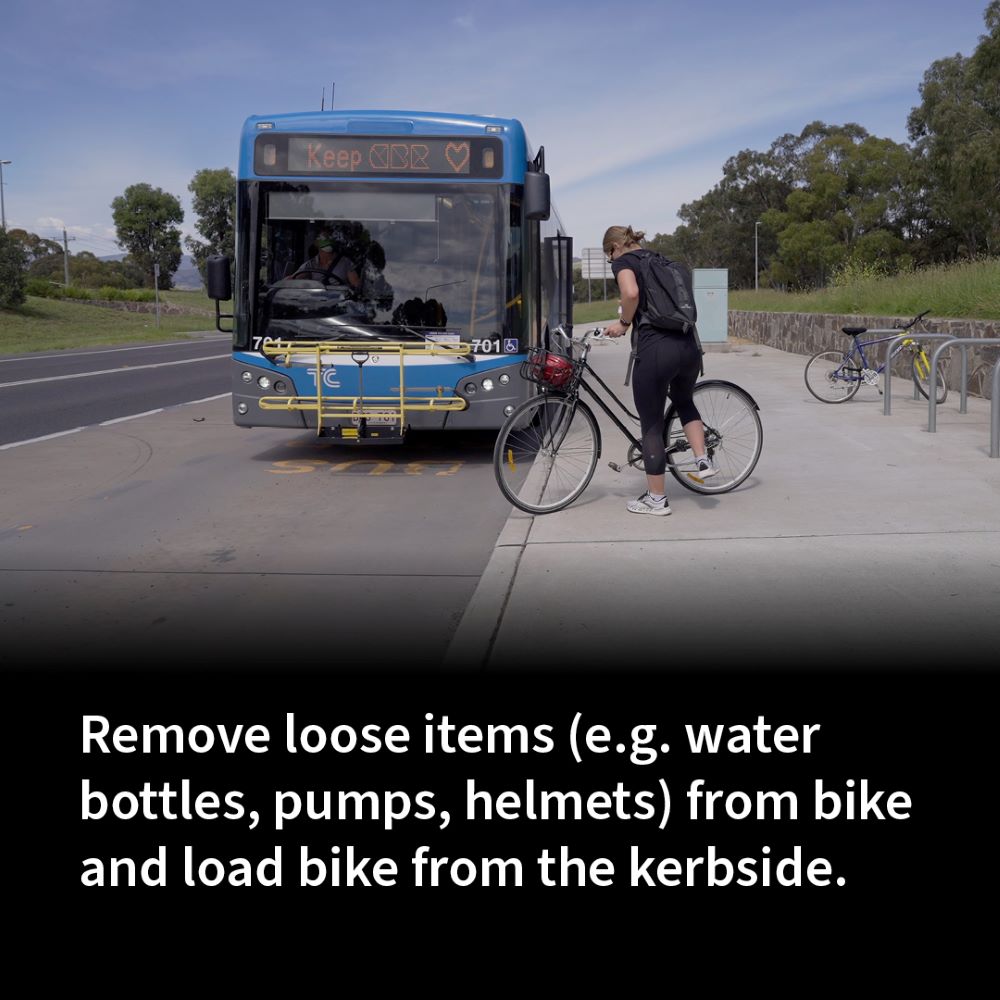
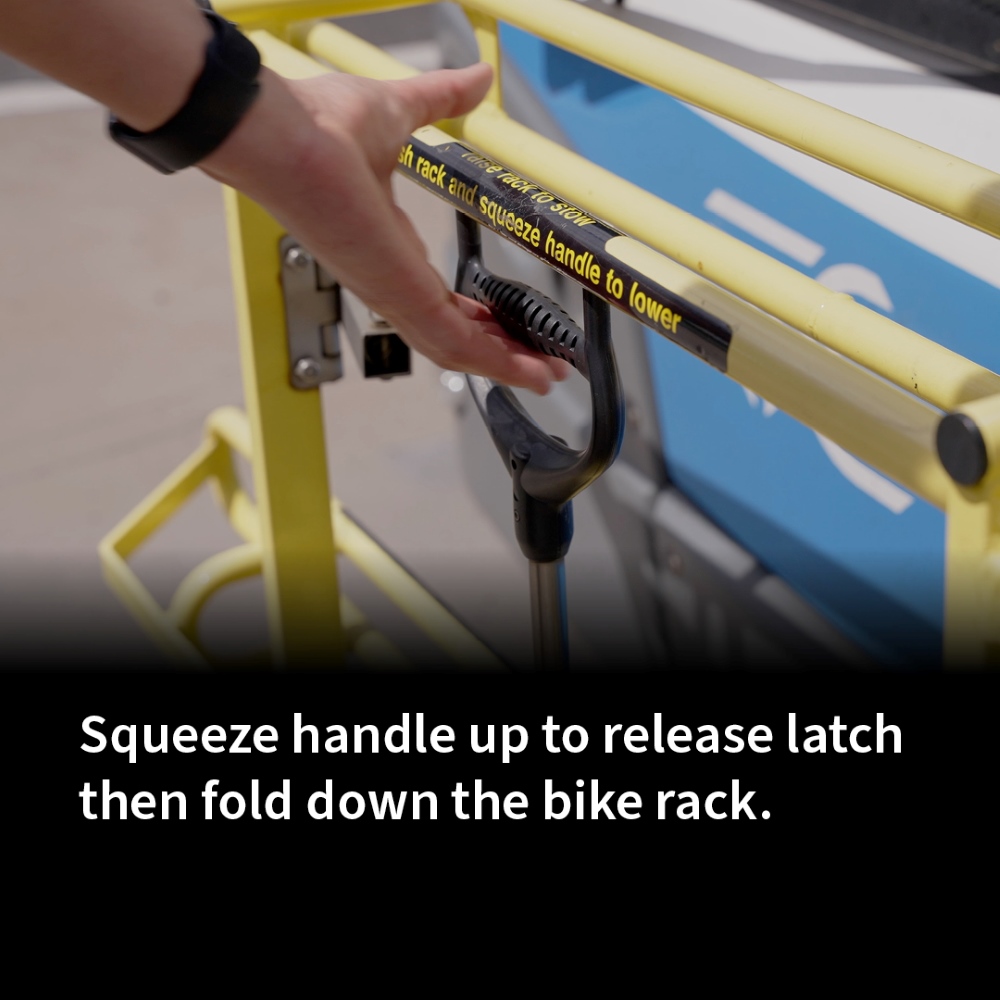
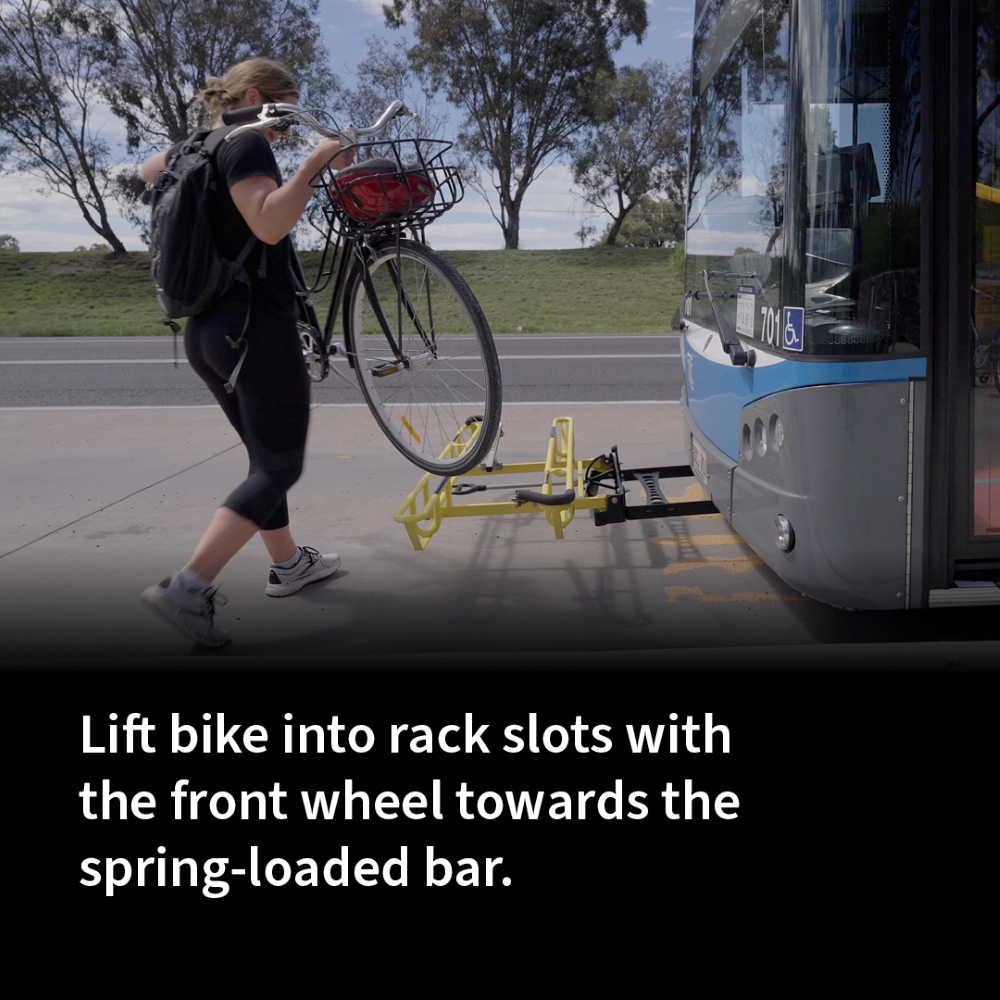
To use the bike racks, watch our bus bike rack video and follow these steps:
- Remove loose items (s (e.g. water bottles, pumps, helmets) from bike and load bike from the kerbside.
- Squeeze handle up to release latch then fold down the bike rack.
- Lift bike into rack slots with the front wheel towards the spring-loaded bar.
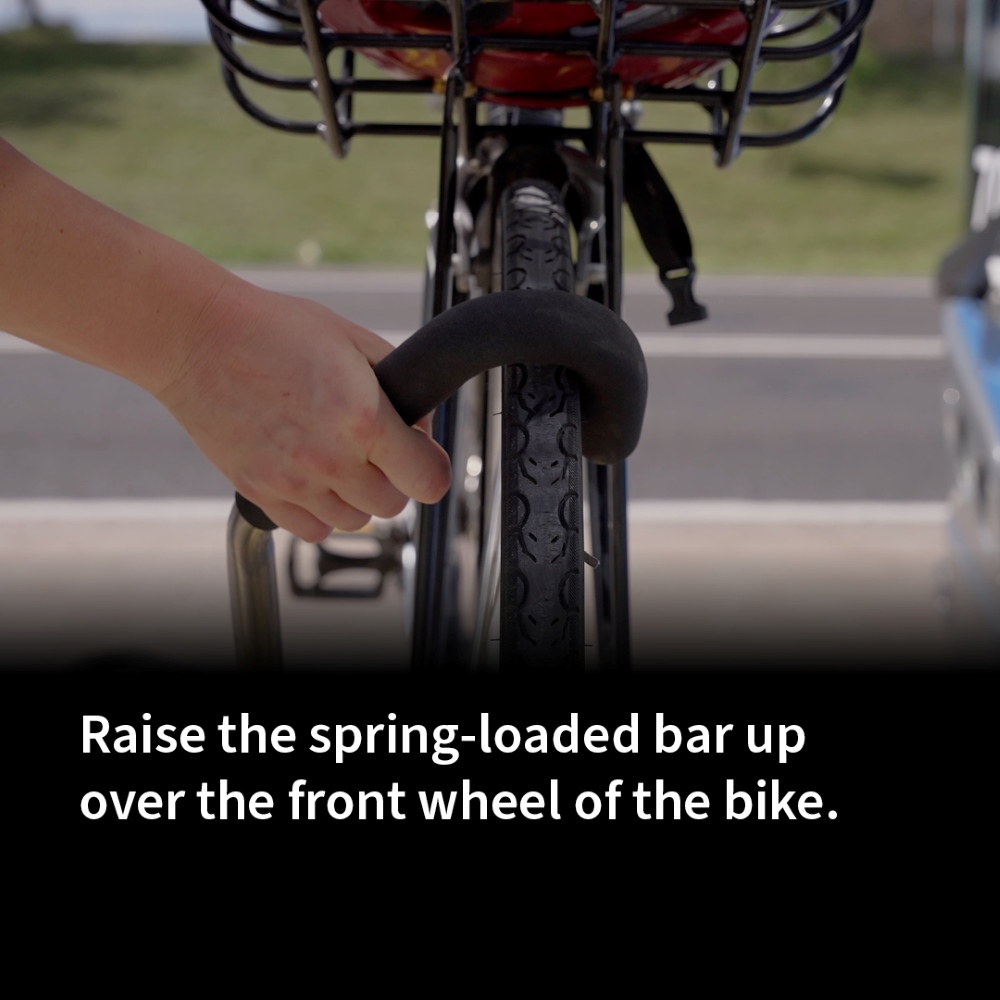
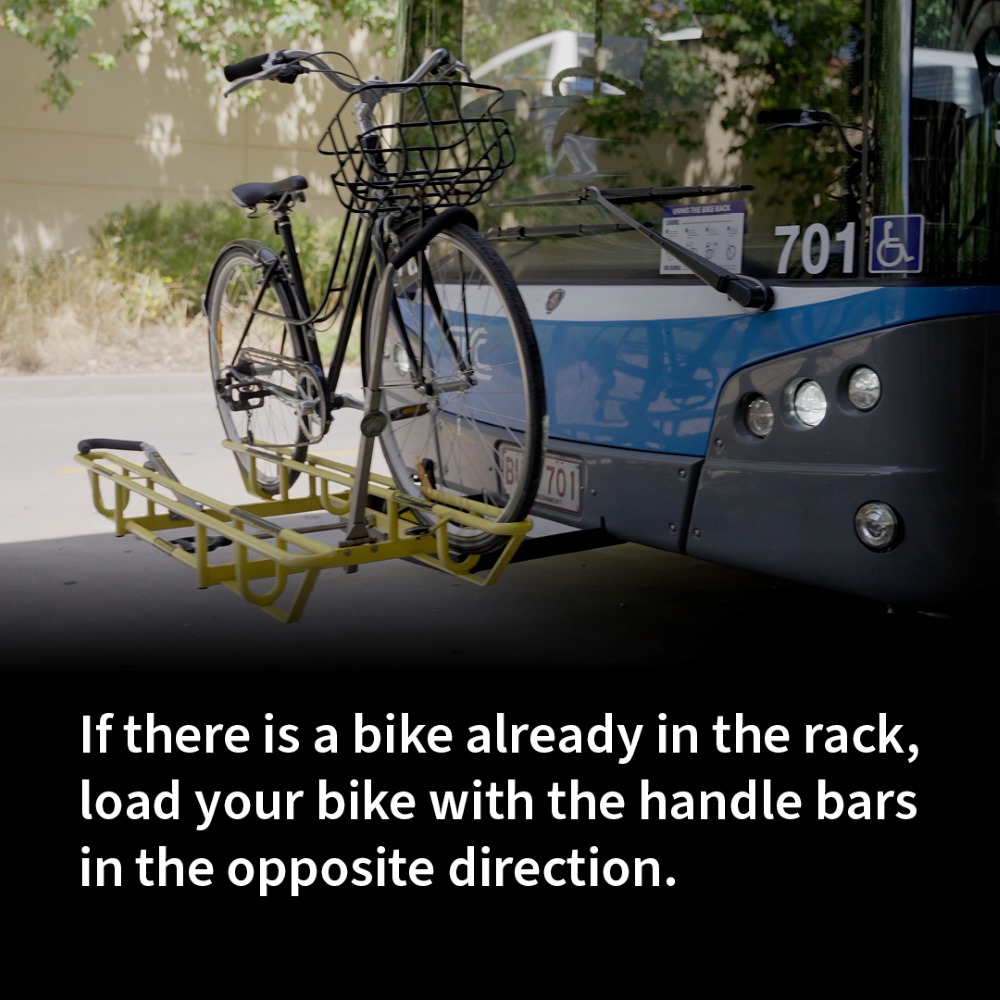
- Raise the spring-loaded bar up over the front wheel of the bike. If there is a bike already in the rack, load your bike with the handle bars in the opposite direction. Then the spring loaded bar will lock down the front wheel.
Select one of the images below to view instructions for using the bike racks.
Please note:
- Bus drivers are not permitted to assist in the loading or unloading of bike racks.
- Fold-up bikes can either be mounted on the bike rack or carried on board and stored out of the way in the luggage rack or on the floor.
- Bus drivers have final discretion for the carriage of goods (including fold-up bikes) on board buses.
- Transport Canberra is not liable for any damage, wear and tear, loss or stolen bikes.
For more information on bus bike racks including the conditions of use (including dimensions and weight limits) see policies.
Bikes on light rail
There are 4 bike racks in each light rail vehicle. For further information on which types of bikes can be brought onto the light rail, and conditions of travel with bikes, visit CMET.
Parking your bike
Bike rails are available across the city and at a number of bus and light rail stops. Bring a lock so you can secure your bike and continue your journey on public transport.
Transport Canberra manages 6 secure bike cages. As we transition from MyWay to MyWay+, you can continue to use your current MyWay card to access the bike cages.
To apply for new access please email mywayplus@act.gov.au your:
- name
- contact number
- postal address and
- preferred bike cage location.
We will send you a new card that will grant your access within 10 business days.
The ACT Government is not liable for any loss or damage to items stored in bike cages, lockers or on rails. For further information see our bikes on buses policy (PDF ).
For a map of bike rails and cages see the Bike & Ride map (PDF 716.5 KB).
Free car parks
Park your car for free and ride your bike the rest of the way. It’s a great way to incorporate exercise and save on parking costs. Car parks are available at:
- Lindsay Pryor National Arboretum car park
- Caswell Drive, Glenloch Interchange
- Hackett Shops, Hackett Place
- Kellaway Street, Hackett
- Palmerville Heritage Park
Safety and road rules
Everyone has a role to play in keeping roads and paths safe. Whether you are cycling, driving or walking, you must follow the road rules and be considerate of other people using shared spaces.
Look out for other road and path users, especially people who may be more vulnerable such as pedestrians and children. Ride predictably, make yourself visible and be aware of your surroundings. The Road Rules apply to all road users, including cyclists for detailed rules and legal requirements in the ACT, see Road Transport (Road Rules) Regulation 2017.
Please see how to share roads and paths for more details.
In the ACT, there are specific road rules for bicycles and e-bikes. These rules apply to bicycles, e-bikes, tricycles, pedicabs and similar modes of transport.
Different rules apply for e-scooters and other mobility devices. Please see e-scooters and personal mobility devices for more details.
Shared e-bikes
Lime operates a shared e-bike service across Canberra. See the micromobility (e-scooter and e-bike) operation area map for details.
Electric bikes
Legal e-bikes, including the shared Lime e-bikes, have the same rights to use the roads as unpowered bicycles. However, not all e-bikes sold in Australian shops or through online retailers are legal for road use.
Legal e-bikes need to be pedalled by the rider. The electronic motor on a legal e-bike is only intended to help the rider. There are limits on when a motor can kick in, and on the speed a motor can help a rider reach.
There are 2 categories of e-bike that meet the standards required in the ACT: a power-assisted pedal cycle and an electrically power-assisted cycle. The propulsion and motor requirements for these types of e-bikes are:
| Power-assisted pedal cycle (PAPC) | Electrically power-assisted cycle (EPAC) |
What makes the bike move? | Pedalling, with a motor to help. Pedalling is required to move at any speed. | Pedalling, with a motor to help. Pedalling is required for speeds over 6 km/h. |
Speed at which the motor cuts off | — | While pedalling – 25 km/h No pedalling – 6 km/h |
How powerful is the motor? | Up to 200 watts. Over 200 watts means the bike is NOT a PAPC. | Up to 250 watts. Over 250 watts means the bike is NOT a EPAC. |
A power-assisted pedal cycle must also have an adjustable seat and weigh less than 50 kg (including the battery).
A bike with an engine is not a legal e-bike.
Devices that exceed permitted power limits or otherwise do not meet ACT requirements may be classified as motor vehicles and be subject to registration, licensing and other regulatory requirements. If the vehicle cannot be registered it may only be used on private property.
Petrol-powered bikes and minibikes
Petrol-powered bikes and minibikes are not permitted on any ACT roads and road-related areas. This includes footpaths, shared paths, cycle ways and cycle paths.
Minibikes (also known as pocket bikes or monkey bikes) do not meet minimum Australian design standards for safety and cannot be registered.
Penalties for using a petrol-powered bikes or minibikes on ACT roads, footpaths, shared paths, cycle ways and cycle paths can be severe.
These vehicles must only be driven on private property.
Permitted bike and e-bike locations
Bike and legal e-bikes can be ridden on:
- Roads
- On-road bike lanes
- shared paths
- footpaths
When riding on a footpath or shared path, please keep to the left and give way to pedestrians. Always ride at a safe speed.
If a bicycle lane is provided, cyclists must use it unless it is not practical to do so.
Cyclists may ride two abreast in the ACT.
Related links
- How to share roads and paths
- Bike & Ride map (PDF 716.5 KB)
- Bike rack instructional video
- CMET
- Walking and cycling maps
Information and facilities for cyclists
- Bike repair stations
- Bike stops
- Learn to ride centres
- Cycling in Canberra - Visit Canberra
- Electric Bike Library
- Pedal Power
- Access Canberra